


Revivalist is a reader-supported endeavor and our posts may contain affiliate links. When you buy through links on our site, we may earn an affiliate commission.
Key Takeaways
- Black tie optional is a flexible dress code that keeps the elegance and sophistication you want while giving your guests more freedom.
- As the cost of being a wedding guest soars, it is considered an inclusive way of respecting your guests.
- It does not mean anything goes. Guests are still expected to wear a tuxedo, a dark suit and tie, an elegant floor- or mid-length dress or a sophisticated pantsuit.
Traditional wedding attire is much-loved by many, but it can be expensive and many couples don’t particularly like the style. Since a wedding day should reflect the couple’s unique personalities and preferences, the “black tie optional” wedding has gained popularity over the years. This concept combines the classic elegance of a black-tie affair with the flexibility for guests to dress according to their comfort and style.
What is a Black Tie Optional Wedding?
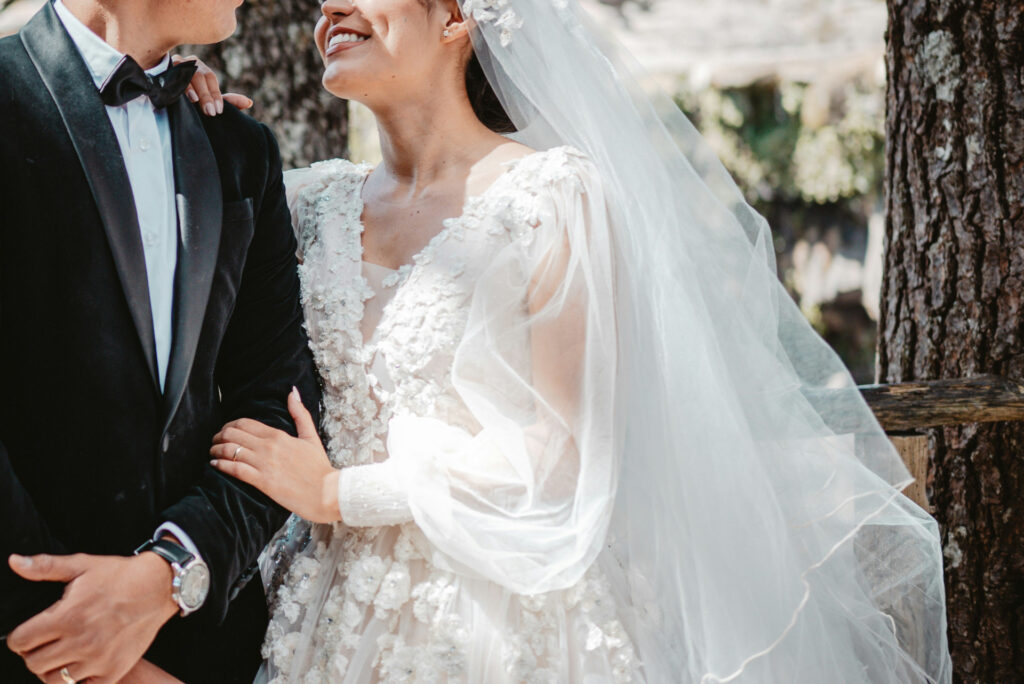
Black tie as a dress code dates back to 1885, when the Prince of Wales, later to become King Edward VII, grew tired of the traditional white tie attire — even more formal and now extremely rare — and ditched the tails for a smoking jacket and matching trousers. Black tie as we know it, with tuxedo and bow tie for men and gowns for women, was born.
A black tie optional wedding offers a blend of formality and inclusivity. While the wedding party and hosts may choose to don glamorous tuxedos and elegant gowns, guests have the option to wear semi-formal or cocktail attire. This approach encourages guests to express their individual styles, ensuring everyone feels comfortable and confident.
Why Choose a Black Tie Optional Wedding?
A black tie optional wedding has many advantages for the wedding party and guests alike:
Flexibility and Comfort
One of the primary reasons couples go for a black tie optional wedding is to accommodate the diverse preferences of their guests. Some may relish the opportunity to go all out in formalwear, while others may prefer a more relaxed attire. Allowing guests to choose what they wear creates an inclusive and comfortable atmosphere.
Personal Expression
Your wedding is a reflection of your identity as a couple. Allowing guests to express themselves through their clothing choices adds a personal touch to the celebration. It also ensures guests feel like active participants rather than just observers.
Versatility
Black tie optional weddings are incredibly versatile. Whether your wedding is set in a grand ballroom, a rustic barn, a beachfront destination or a peaceful garden, this dress code can adapt to various settings, making it an ideal choice for diverse wedding venues.
Budget-Friendly
For some guests, the idea of renting or buying formal attire can be financially challenging. A 2026 poll found that almost a third of wedding guests expect it to cost more than $600 to attend a wedding, with almost 20% expecting to pay $1,000 or more.
This dress code provides relief to those who want to attend your wedding without the added expense of purchasing a tuxedo or a formal gown. Even renting black tie wedding attire can run to several hundred dollars apiece, so many couples don’t want to make guests feel that they must afford this.
Finding a Balance
While the concept of a black tie optional wedding offers flexibility, it’s crucial to strike the right balance between formal and casual to maintain the elegance of the occasion. Here are some tips:
- Communicate clearly: Clearly communicate the dress code on your invitations and wedding website so guests understand the expectations. Provide examples of what attire is suitable for both the black tie and semi-formal options. For example, state that for men you’d like to see a tuxedo or a dark suit and tie, and for women a floor-length gown, a fancy cocktail dress or a dressy pantsuit.
- Set the tone: The wedding party’s attire can help set the tone. If you and your partner choose to go all out with formalwear, it will encourage your guests to follow suit. Conversely, guests will feel more comfortable doing the same if you opt for semi-formal attire.
- Accessorize: Encourage your guests to personalize their outfits with accessories. A well-chosen tie, a statement necklace or unique shoes can elevate a semi-formal outfit to match the black-tie affair.
What Can You Wear to a Black Tie Optional Wedding?
- Elegant gown: A full-length formal dress is ideal for those who want to go all out for the black-tie side. Choose rich, dark colors like deep red, navy, emerald green or classic black. Select a style that suits your body type and personal taste. This style can be an A-line, mermaid or ball gown.
- Cocktail dress: A knee-length or tea-length cocktail dress in a sophisticated color and fabric is perfect for a black tie optional wedding. Add heels and statement jewelry to complete the look.
- Separates: Another option is to wear separates, like a blouse or top, paired with a skirt or dressy pants. Make sure the pieces are elegant and well-coordinated.
- Accessories: Remember to accessorize. Add elegant jewelry, a clutch purse and appropriate shoes to complement your outfit.
- Hairstyle: You can’t go wrong with a classic updo for a semi-formal event. A sleek bun, chignon, French twist or a slicked-back ponytail are great options as they exude sophistication while still allowing your outfit to shine. You could also consider glamorous waves or a sleek and smooth look if an updo differs from your usual style.
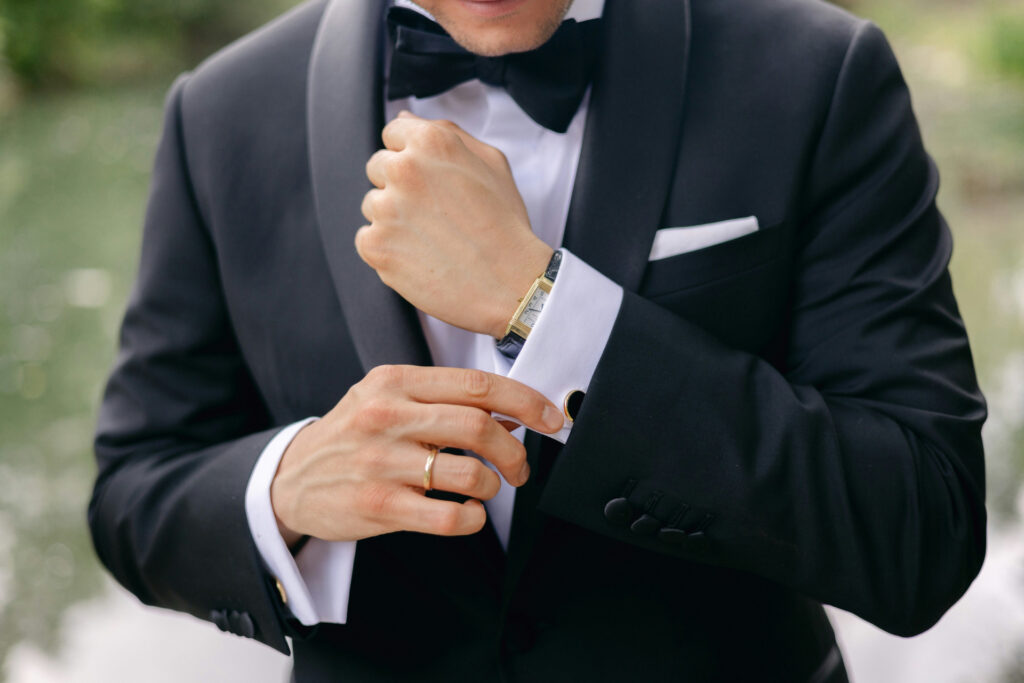
Men often stick to a classic tuxedo, a dark suit or a tuxedo jacket with dress pants for this type of wedding. However, you could try something like a velvet dinner jacket with black trousers. Add some accessories like cufflinks or a pocket square to elevate the look.
What Should You Avoid Wearing to a Black Tie Optional Wedding?
While a black tie optional wedding offers flexibility, there are still certain items and styles you should generally avoid to ensure you’re respecting the formality of the event. Here are some things to steer clear of:
- Overly revealing or casual outfits: Avoid wearing revealing or extremely casual attire. This includes extremely short dresses, low-cut tops and outfits more suited for a beach vacation than a formal event.
- White gowns: Traditionally, wearing white to a wedding is reserved for the bride only. Choosing a different color is best to avoid drawing attention away from her.
- Denim or jeans: Denim and jeans are far too casual for this event. Even if you’re dressing on the more relaxed end, choose more formal fabrics and styles.
- Inappropriate footwear: Sneakers or flip-flops aren’t suitable for this event. Go for elegant heels or dressy flats.
- Excessive sequins or sparkle: While some sparkles can be elegant, avoid outfits with excessive sequins or glitter, as they can appear flashy for a formal event.
- Ultra-casual accessories: Avoid overly casual accessories like beach-themed jewelry or hats.
Men should avoid casual wear like jeans, sneakers, T-shirts or polo shirts. Men should also avoid bright colors, shorts, flip-flops and unbuttoned shirts.
Style Beyond the Binary
Today’s formalwear is less about adhering to rigid gender roles and more about expressing personal style with sophistication. A black tie optional wedding is a perfect opportunity to embrace this freedom. For those who find traditional gowns or tuxedos confining, consider these chic and appropriate alternatives:
- The tailored suit: A sharply tailored suit in a dark, luxurious fabric like velvet, satin or a high-quality wool blend is an excellent choice. Fit is everything, so ensure it’s altered to your body for a polished silhouette. Pair it with a silk camisole, a formal button-down shirt or no shirt at all for a daring, high-fashion look.
- The elegant jumpsuit: A floor-length jumpsuit in a solid, rich color like emerald or navy can be just as glamorous as a gown. Look for styles with interesting necklines, wide-leg trousers or subtle draping. Elevate the look with statement jewelry and a pair of striking heels.
- Sophisticated separates: Combine a pair of elegant, wide-leg silk trousers with a formal top. This could be a sequinned shell, a cashmere sweater for a winter event or a structured bustier. The key is to ensure both pieces are high-quality and create a cohesive, formal impression.
Ultimately, confidence is the best accessory. If your outfit is formal, fits you impeccably and makes you feel fantastic, you’re perfectly dressed for the occasion.
Frequently Asked Questions
Dress codes for weddings bring a lot of questions. Here are some answers that may help.
I don’t feel comfortable wearing a dress — what are my other options for a black tie optional wedding?
You absolutely do not have to wear a dress to look formal and elegant. Consider a chic, floor-length jumpsuit in a luxurious fabric, a sharply tailored suit or sophisticated separates. As long as the outfit is polished and fits the formal tone, it is perfectly appropriate.
How “optional” is the black tie part? Will I look out of place if I don’t wear a full tuxedo or gown?
The “optional” is there for a reason. The couple chose this dress code specifically to ensure guests feel comfortable and confident. While the wedding party and some guests may be in full black tie, you will not look out of place at all in a dark, well-fitted suit and tie or an elegant cocktail mid-length dress.
I’m attending a black tie optional wedding this winter, but I don’t want to get cold. What are my options?
For a winter wedding, embrace the season with heavier, more luxurious fabrics like velvet or brocade, and choose deeper colors like jewel tones or metallics. It’s also a great opportunity for elegant outerwear, such as a formal overcoat or faux-fur wrap, that complements your look.
Keeping It Classy
A black tie optional wedding strikes the perfect balance between traditional elegance and personal expression. It’s a choice that ensures all guests feel comfortable and included while still upholding the sense of occasion that a wedding deserves. Ultimately, your wedding day should reflect your love story and this versatile dress code allows you to do just that.
Published December 1, 2023 – Updated June 22, 2026



Share this article