


Revivalist is a reader-supported endeavor and our posts may contain affiliate links. When you buy through links on our site, we may earn an affiliate commission.
My mom skipped a significant bridal tradition for her time. No dramatic bouquet or huge arrangement with cascading ribbons. She ditched the carefully coordinated flower language and carried a tiny silver-covered Bible with a single white lily and one ribbon.
Today’s brides have more freedom than ever to decide what belongs in their hands as they walk down the aisle. A bridal bouquet can still be traditional and romantic, but it can also be sculptural, minimalist, colorful, sentimental or not made of flowers at all.
You can play with wedding bouquet shapes, flower types, color palettes, movement and texture. If you’re deciding between classic blooms and something completely unexpected, these types of bridal bouquets offer plenty of inspiration.
8 Beautiful Types of Bridal Bouquets
If your heart is already leaning toward a classic bouquet of blooms for your special day, these are some of the best arrangements to consider. However, you may want to be careful in your selection, as the average cost for wedding flowers at $2,800 can quickly add up.

1. Cascade Bouquet
When your wedding mood board includes words like romantic, dramatic or cinematic, the cascade bouquet earns its reputation. This style spills downward in a waterfall shape, creating movement and softness with every step. It became iconic through royal weddings but feels surprisingly current when paired with looser greenery and modern flower choices.
Classic versions lean into orchids, roses and trailing ivy. Modern takes often mix garden roses, delphinium and softer textures.
It’s best suited for formal ballroom weddings, historic venues, black-tie celebrations or cathedral ceremonies. It pairs beautifully with long trains, structured gowns and voluminous veils. This bouquet becomes part of the outfit rather than simply an accessory.
2. Posy Bouquet
Small doesn’t mean forgettable. A posy bouquet feels polished, intentional and quietly elegant. Flowers are gathered tightly into a neat dome shape that photographs beautifully without stealing attention from your dress.
This is the bouquet equivalent of timeless jewelry — understated but refined.
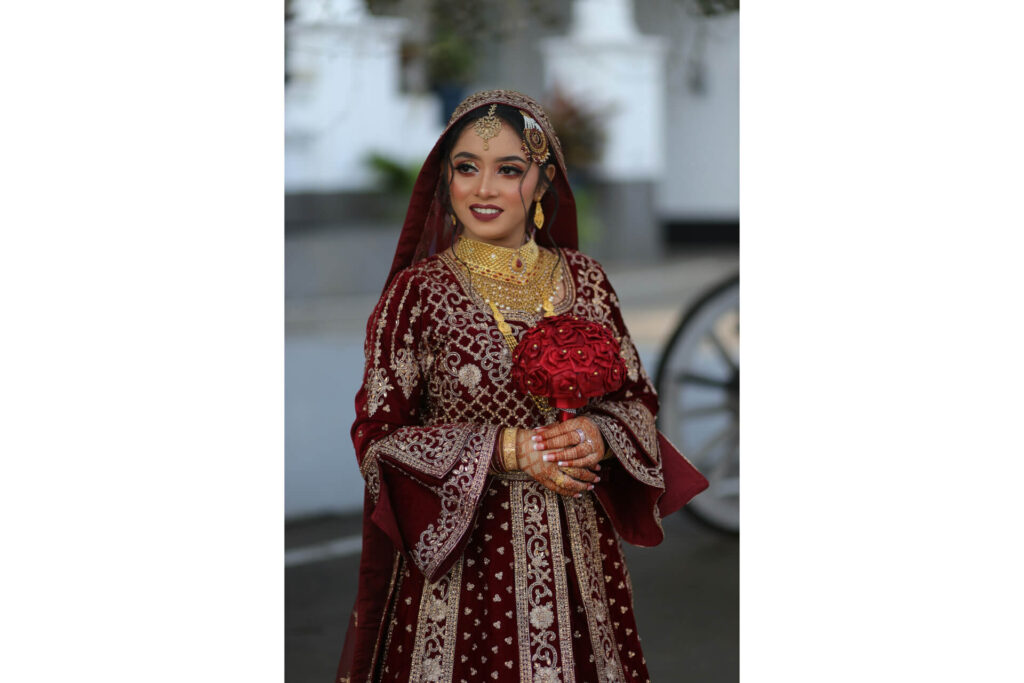
Popular flowers include peonies, ranunculus, roses and tulips. It is best suited for city weddings, courthouse ceremonies, classic church weddings or intimate celebrations.
Pair it with minimal gowns, satin fabrics and clean silhouettes. If your style says, “I want people to notice me before my flowers,” this is a strong contender.
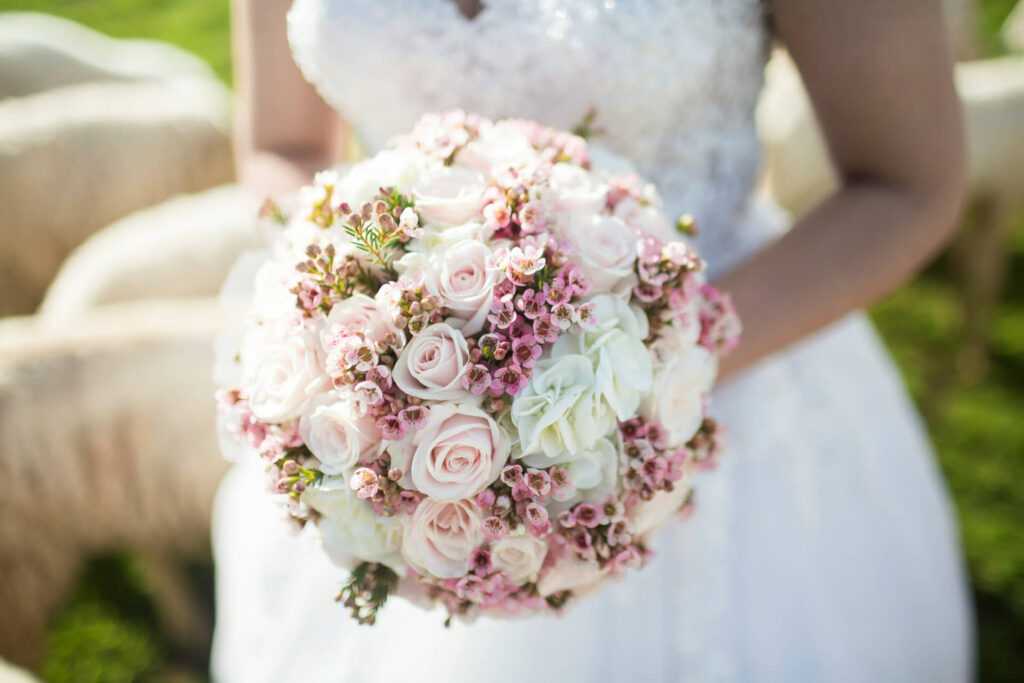
3. Round Bouquet
The round bouquet remains popular because it works with almost everything. Its symmetrical shape feels classic and balanced while still leaving room to play with color and texture. You can go all-white and elegant, bright and joyful or soft and tonal. The shape creates beautiful portrait moments and looks especially polished from every angle.
It’s best suited for traditional weddings, garden venues, luxury hotel celebrations or large bridal parties. Pair it with ball gowns, a-line dresses or traditional veils.
4. Hand-Tied Bouquet
Hand-tied bouquets feel like someone gathered flowers from the most beautiful market in Europe and wrapped them moments before the ceremony. They’re loose, airy and intentionally imperfect in a way that feels warm and modern.
Expect visible stems, varying flower heights and lots of texture. Popular choices include sweet peas, cosmos, garden roses and eucalyptus. Add some bling with pearls, diamante details and even a string of light-reflecting ribbon, which instantly livens things up and boosts your mental well-being when it catches the sunlight.
It’s best suited for vineyard weddings, outdoor ceremonies, destination weddings and countryside celebrations. Pair it with soft fabrics, slip dresses and relaxed silhouettes.
5. Nosegay Bouquet
The nosegay is neat, structured and full of old-world charm. Usually smaller and more compact than many modern bouquets, it often includes a decorative wrap or greenery border that gives it extra shape.
It feels thoughtful and slightly vintage without looking overly traditional. This is the best option for estate weddings, vintage-inspired celebrations, afternoon ceremonies and romantic indoor venues. Pair it with lace details, tea-length dresses and delicate accessories.
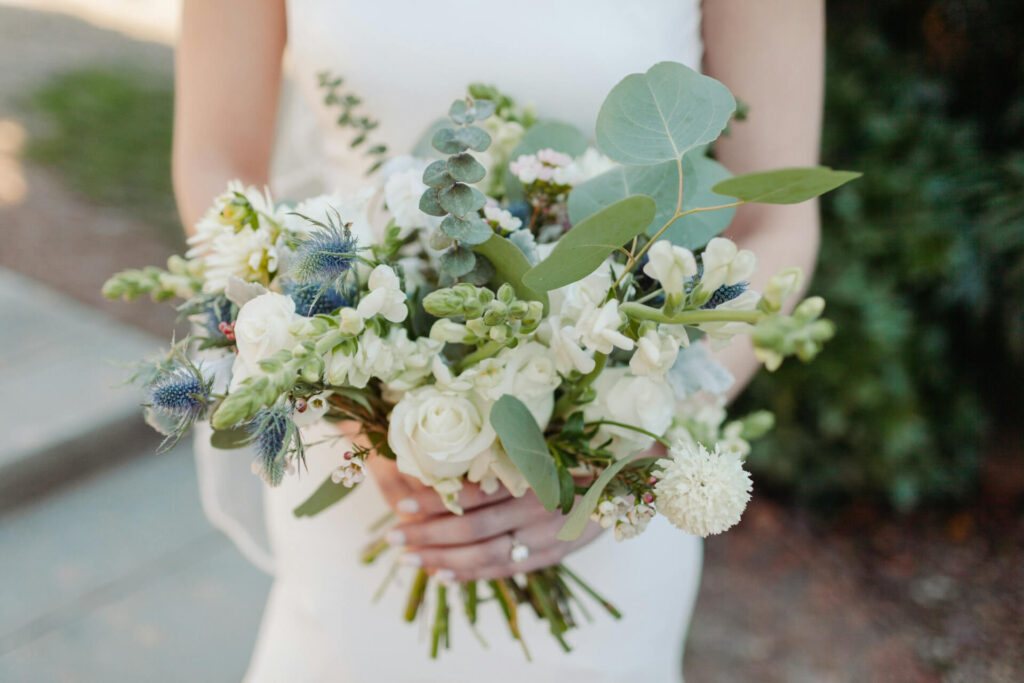
6. Crescent Bouquet
A crescent bouquet curves gently outward on both sides, creating a shape that feels artistic and a little unexpected. It gives movement without the fullness of a cascade and often looks incredible in editorial-style wedding photography.
This bouquet feels fashion-forward but still soft. Popular flowers include orchids, jasmine vine and sweet peas. It’s best suited for contemporary weddings, art gallery venues, luxury destination celebrations and fashion-led ceremonies. Pair it with modern gowns, sculptural dresses and clean necklines.
7. Presentation Bouquet
There’s something undeniably glamorous about carrying flowers in the crook of your arm.
Presentation bouquets use long stems and a relaxed carrying style that feels elegant without trying too hard. Think old-Hollywood photographs with a modern update. Calla lilies, orchids and long-stem roses work especially well.
This style is best suited for modern city weddings, evening receptions, art deco styling and minimal celebrations. Presentation styles pair beautifully with column dresses, sleek silhouettes and satin finishes.

8. Wildflower or Asymmetrical Bouquet
This bouquet looks like it belongs in a wedding album that people keep opening years later. Wildflower and asymmetrical bouquets celebrate movement, texture and personality instead of perfect symmetry. One bloom sits higher, greenery spills outward and colors feel layered rather than matched.
No two arrangements look exactly alike. This unkempt style works really well for backyard weddings, mountain venues, coastal ceremonies and boho celebrations. Pair these relaxed arrangements with flowing fabrics, romantic sleeves or natural makeup looks. If you want your bouquet to feel collected rather than arranged, this style does it beautifully.
How to Choose Your Bridal Bouquet
If choosing your bouquet feels weirdly overwhelming, you’re not alone. One minute you think, “I’ll just pick some flowers.” Next, you’re looking at 47 shades of blush roses, wondering whether a cascade bouquet suits your venue and it greenery has a personality.
The good news? There isn’t a right choice.
Your bouquet doesn’t need to follow tradition or match Pinterest perfectly. It just needs to feel like it belongs in your wedding story. Start with these questions.
Shape: What Mood Do You Want to Create?
Bouquet shape changes the entire feeling of your look.
Round and posy bouquets feel polished and timeless. Hand-tied bouquets feel relaxed and romantic. Cascades create drama and movement, while asymmetrical bouquets feel artistic and a little unexpected.
When stuck, imagine looking back at photos years from now. Do you want to think elegant, effortless, bold or whimsical? That feeling matters more than trends.
Size and Length: Let Your Dress Have a Conversation With It
Your bouquet and dress should feel like they belong together, not compete for attention.
Big, structured gowns often pair beautifully with fuller bouquets. Sleek dresses can feel elevated with a single dramatic flower or something long and sculptural.
And don’t forget practicality. You’ll carry this through hugs, photos, walking and probably at least one emotional moment.
Color Palette: Match the Feeling, Not Necessarily the Fabric
Your bouquet doesn’t need to match your bridesmaids’ or table settings perfectly. Instead, think about atmosphere. Soft whites and greens feel classic and fresh. Deep burgundy and blush feel romantic. Bright colors bring energy. Monochrome bouquets can feel surprisingly modern. Your flowers can blend into the day or become one of its standout details.
Flower Choice: Think Beyond Looks
Some flowers carry memories. Maybe your grandmother loved lilies. Perhaps you always buy peonies in spring. Maybe your partner brought sunflowers on your first date.
You can also think seasonally, choosing flowers that naturally belong to your wedding month often creates a more effortless look. And if flowers don’t feel meaningful at all? That’s your permission slip to skip them entirely.
Photos and Practicality: Picture Yourself Holding It
This sounds obvious until the wedding day arrives, but picture yourself holding your bouquet while laughing, hugging people, walking down the aisle and posing for portraits.
Will you preserve it? Do you toss it? Will it feel comfortable after an hour?
Sometimes the bouquet that photographs beautifully is different from the bouquet that feels amazing to carry. The sweet spot is finding one that does both. And if flowers aren’t your thing, you can absolutely ditch them in favor of an alternative arrangement. You can also have your bouquet preserved indefinitely instead of tossing it, which is becoming increasingly popular.
8 Nontraditional Bouquet Alternatives
Flowers aren’t the only thing that belongs in your hands on your wedding day. If traditional bouquets never quite felt like you — it’s got a history as long as the wedding invitation — or you want something more practical, memorable or symbolic, these alternatives can become part accessory, part storytelling piece and part photo moment.
1. Brooch Bouquet
A brooch bouquet feels deeply personal in a way fresh flowers rarely can.
Built from vintage brooches, heirloom pins, pearls or collected pieces, these bouquets catch the light beautifully and often become family keepsakes afterward. Some brides include jewelry from grandmothers, mothers or meaningful milestones. This option works especially well if sentiment matters more than tradition.
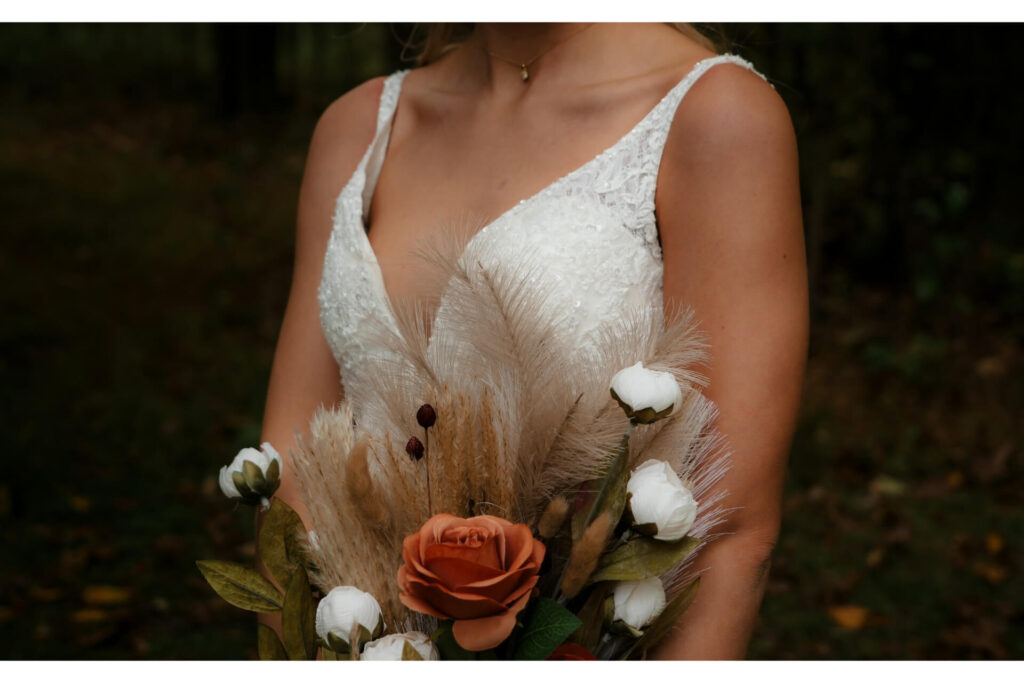
2. Feather Fan
A feather fan doesn’t whisper — it glides. Whether dramatic and oversized or soft and delicate, carrying a feather fan creates movement and elegance that feels cinematic. It gives your hands something natural to do and doubles as a practical accessory. This feels less like replacing a bouquet and more like changing the entire mood.
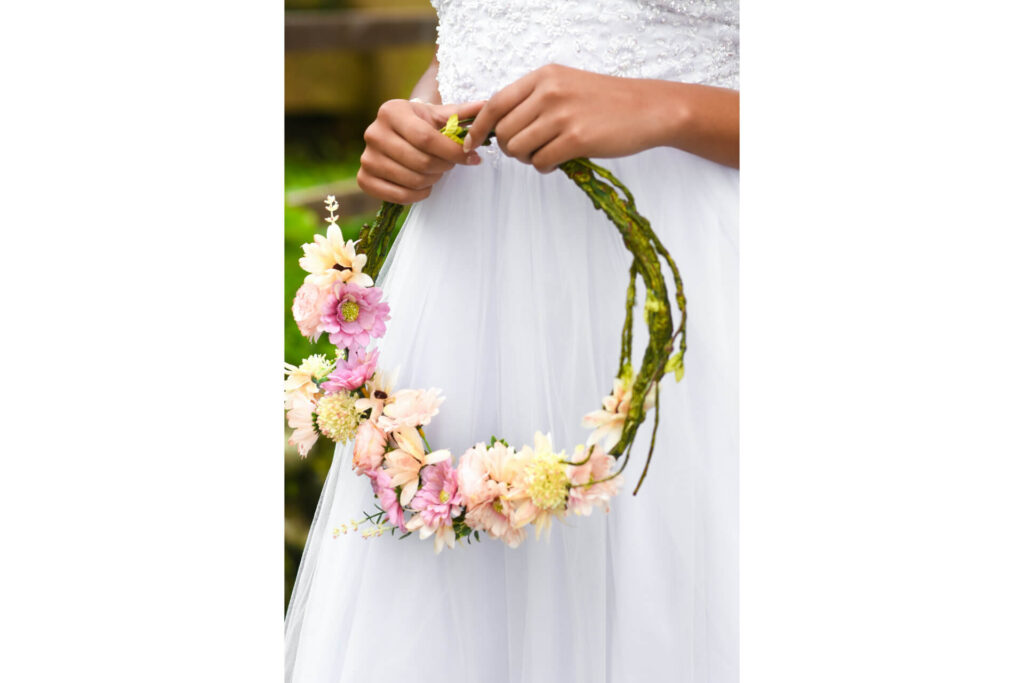
3. Floral Hoop
A floral hoop feels modern without being cold. Instead of holding flowers, you carry a metal or wooden circle adorned with blooms and greenery. It feels lighter, cleaner and unexpectedly elegant. The open shape photographs beautifully and doesn’t hide dress details.
4. Lantern
A lantern turns the aisle more atmospheric. Whether filled with candles, fairy lights or subtle floral accents, it creates a warm glow that feels intimate and cinematic, especially during evening ceremonies. Unlike a bouquet, this becomes part decor and prop at the same time.

5. Stack of Books
For the bride whose favorite stories shaped her life. A stack of carefully chosen books, tied with a silk ribbon, feels literary, intimate and completely unexpected. They might represent favorite novels, shared memories or chapters of your relationship. Done well, this feels elegant rather than themed.
6. Custom Clutch
A custom clutch is one of the most practical and polished alternatives. Whether embroidered, beaded or personalized, it creates a cleaner silhouette while keeping essentials close. It also transitions effortlessly into the reception.
7. Seashell Bouquet
Seashell bouquets feel textured, sculptural and surprisingly timeless. Built from shells in soft neutrals or layered tones, they capture a coastal feeling without becoming overly themed. Unlike fresh flowers, this can be displayed afterward.
8. Single Dramatic Statement Piece
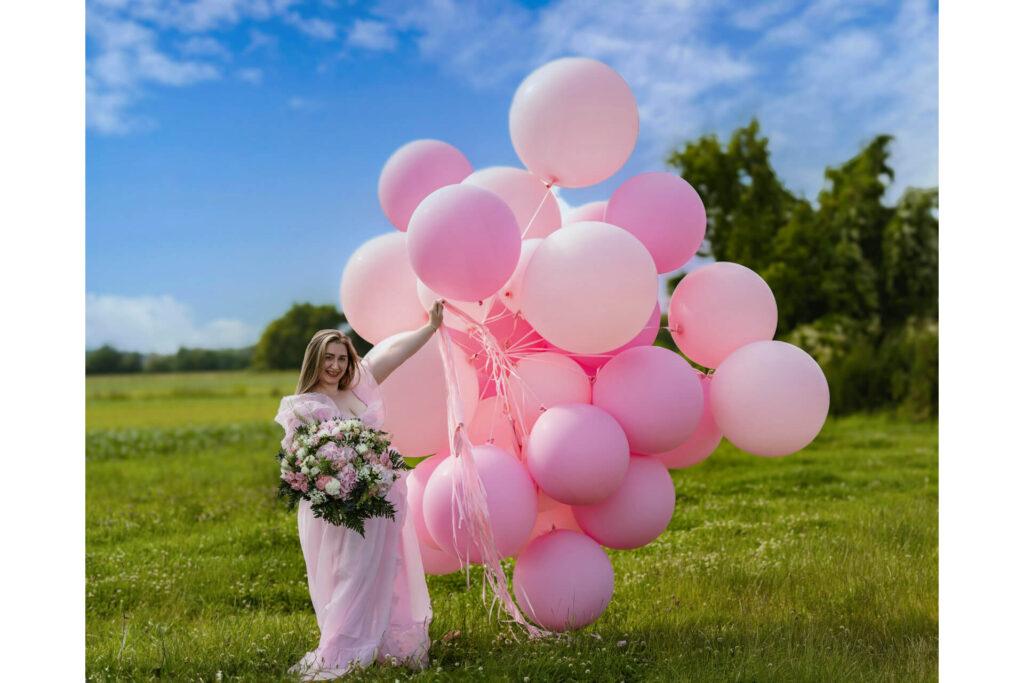
Sometimes one perfect object says more than an entire arrangement. A single oversized protea, sculptural branch, giant paper flower, red balloon or another meaningful statement piece creates confidence and simplicity. This choice works because it refuses to compete.
You may also consider making your own fabric flower bouquet, as this video shows, and it can be stunning with the right color choices and jewelry to complement it.
Bridal Bouquet Decision Checklist
When looking at your options, it’s wise to ask questions that give you a clearer picture of what your bouquet may look like.
| Ask Yourself | Traditional Bouquet | Alternative Bouquet |
| Do I want classic wedding photos? | Great fit | Depends on style |
| Do I want to preserve it afterward? | Dry or press flowers | Often easier to keep |
| Will I carry it for several hours? | Weight matters | Often lighter |
| Am I doing a bouquet toss? | Easy | May need a separate toss item |
| Is my dress highly detailed? | Smaller bouquet | Minimal accessory |
| Do I want sentimental value? | Flower symbolism | Heirlooms or keepsakes |
| Is the weather a concern? | Heat-sensitive | Often more durable |
| Do I want guests to remember it? | Elegant | More unexpected |
More Questions About Bridal Bouquets
Are nontraditional bouquets more affordable than fresh flowers?
Sometimes. Simpler alternatives can cost less, while custom heirloom pieces may cost as much as premium florals.
What are some good DIY nontraditional bouquet ideas?
Paper flowers, button bouquets, book stacks and herb bundles are all approachable DIY options.
What can I do for the bouquet toss if I skip flowers?
Use a dedicated toss bouquet or substitute another lightweight keepsake item.
Carry What Feels Like You
Wedding traditions can offer inspiration, but they don’t need to become rules. Whether you carry a dramatic cascade, a single flower or something no one expects, your bouquet should feel like part of your story, not a box to tick. My mom’s tiny white Bible and single lily still stand out in family photos decades later.




Share this article