


Revivalist is a reader-supported endeavor and our posts may contain affiliate links. When you buy through links on our site, we may earn an affiliate commission.
Something about scrolling past yet another treadmill trend made me pause. The 12-3-30 workout has circled the fitness world for years, promising sweat and results from nothing more than an incline, a slow jog’s pace and half an hour of patience. I decided to test it myself for a full week, tracking every wobble, every burning quad and every tiny win a long the way. Here’s what actually happened when I tarded my usual routine for a 12% incline and three miles an hour.
What the 12-3-30 Workout Involves
The math behind the name is simple. Set the treadmill to a 12% incline, walk three miles an hour and keep going for 30 minutes straight. Fitness influencer Lauren Giraldo popularized the routine years ago as a low-impact alternative to interval training and it caught on fast among people who found traditional cardio boring or too intense. The appeal is that you don’t need any equipment beyond a treadmill, there are no complicated intervals and there is no signup fee for a specialty class.
What surprised me most going in was how deceptively hard a steady incline walk can feel. There is no sprinting to hide behind, just a consistent incline that works your glutes, calves and lower back for the full half hour. Would a week of it actually change how I felt rather than just how I looked?
Day One and Two — Finding My Footing on the Incline
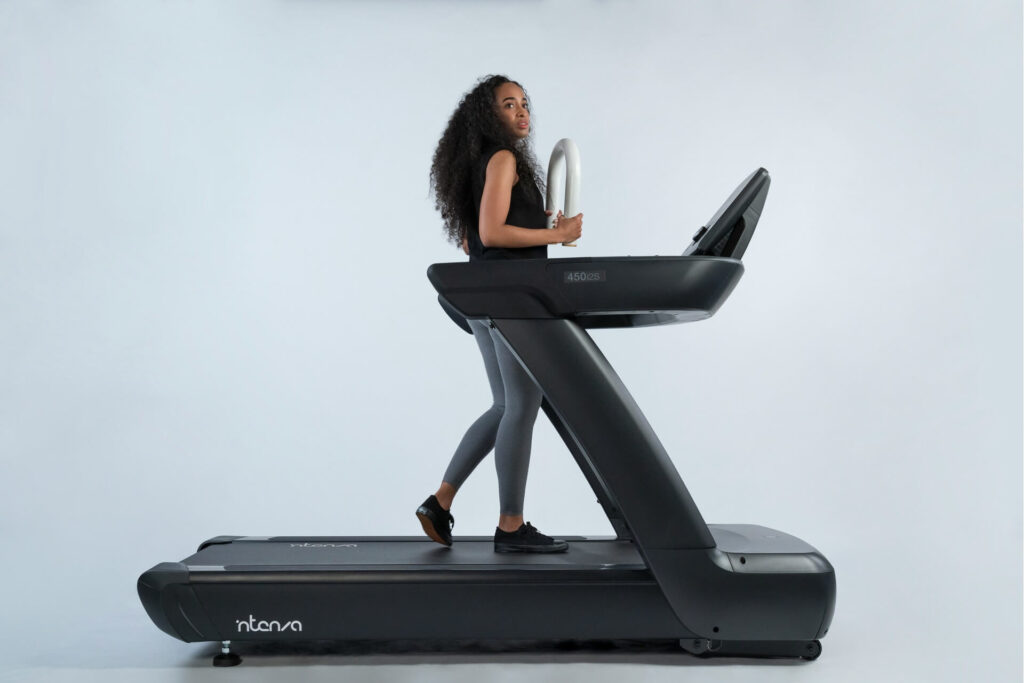
My first session started strong and then fell apart around minute 18, when my calves started burning in a way that made me question my life choices. I held the handrails more than I’d like to admit on day one, a habit Giraldo has said she alternates between doing and skipping.
By day two, my balance improved enough that I only reached for support twice, both times near the 25-minute mark when fatigue crept into my hips. The soreness the next morning surprised me. This was not the familiar ache of a heavy leg day at the gym. It was a specific, localized burn in my calves and the arches of my feet, the kind that comes from stabilizing on an angle instead of flat ground.
By the second workout, my breathing settled into a rhythm faster than it had the day before. My heart rate climbed quickly at the start of each session, then leveled off once my legs adjusted to the incline. This made the last half of the 30 minutes feel more manageable than the first ten.
The Research Behind the Sweat

Curiosity got the better of me by day three, so I looked into what researchers have actually found. One study compared 12-3-30 sessions to self-paced treadmill running matched for total effort. The researchers found that walkers burned a higher percentage of fat for fuel than runners did, even though running still burned more total calories per minute.
A separate study compared high-incline walking with jogging at matched calorie burn and found that incline walkers reported lower perceived exertion despite their heart rates rising to levels similar to those of the runners. That tracked with exactly what I felt on day four, when my legs worked just as hard as they did on any run I’ve done, but my head felt less scattered by the effort.
The mental health angle carries its own research, too. One study reviewed 75 randomized controlled trials and found that walking meaningfully reduced depression and anxiety symptoms across nearly 8,600 participants. Whatever was happening physically during my week on the incline, the mental clarity afterward tracked with what the data already shows.
The Midweek Mental Shift

By midweek, the workout stopped feeling like a task and started feeling like a reset. Instead of doomscrolling or replaying my to-do list incessantly, I found myself using the 30 minutes on the treadmill as a mental clearing space.
Mindfulness experts often point out that repetitive movement can double as a grounding practice. Start with just four minutes of focused walking before building up from there and my 30-minute sessions gave me plenty of time to notice my breathing, the rhythm of my steps and the small ways my energy shifted as the workout went on.
The biggest change was not physical. Instead, it was how I felt stepping off the treadmill each day, calmer and more settled than when I climbed on. That shift is what kept me coming back on the days my legs wanted a break instead.
Tips for Trying the 12-3-30 Method Yourself
If the 12-3-30 sounds worth trying, a few adjustments make the first week smoother. Start below 12% if you need to. Begin at an 8% or 9% incline and build up over a few sessions instead of jumping straight into the full incline. Hold the rails only when necessary. Light support helps with balance, but leaning too much reduces the workout for your glutes and calves.
Break the 30 minutes into checkpoints. Mentally splitting the session into three 10-minute blocks makes the middle stretch feel shorter. Wear supportive shoes. An incline changes how your foot strikes the belt, so a shoe with solid arch support helps prevent unnecessary strain on your feet. Pair it with a rest day. The incline targets your calves and lower back, so specifically, giving those muscles a full day off between sessions helps you recover fully.
A friend who tried this with me after her physical therapist recommended incline walking for a knee injury found that starting at a lower incline let her build confidence before working up to the full protocol. Small adjustments like these make the workout sustainable instead of something you dread by day three.
Uphill and Away
A week on the incline taught me more about patience than calories burned. The 12-3-30 will not replace every workout I do, but it earned a permanent spot in my weekly rotation for the mental reset alone. If you want a low-impact way to challenge your legs and quiet your mind at the same time, lace up, set the incline and give yourself 30 minutes to see what changes. Sometimes the simplest routines carry the biggest payoff.


Share this article