


Revivalist is a reader-supported endeavor and our posts may contain affiliate links. When you buy through links on our site, we may earn an affiliate commission.
As you start planning the most exciting part of the wedding, the party, you’re probably thinking about the bar. It’s where guests will mingle, toast and dance the night away. Understanding the cost of alcohol for a wedding helps you create a fantastic experience that fits your vision and wallet.
How Much Will You Actually Spend on Wedding Alcohol?
U.S. couples usually spend an average of $2,800 for alcohol at a wedding. This gives you a solid starting point as you begin planning your specific budget. Keep in mind that this is a national average, so your own costs will vary based on your guest list, venue and the type of party you want to throw.
Think of the $2,800 figure as a helpful benchmark rather than a rule. Some couples spend less, some spend more. The key is understanding what drives those differences so you can make informed choices that work for your celebration.
What Influences the Total Cost of Your Bar?
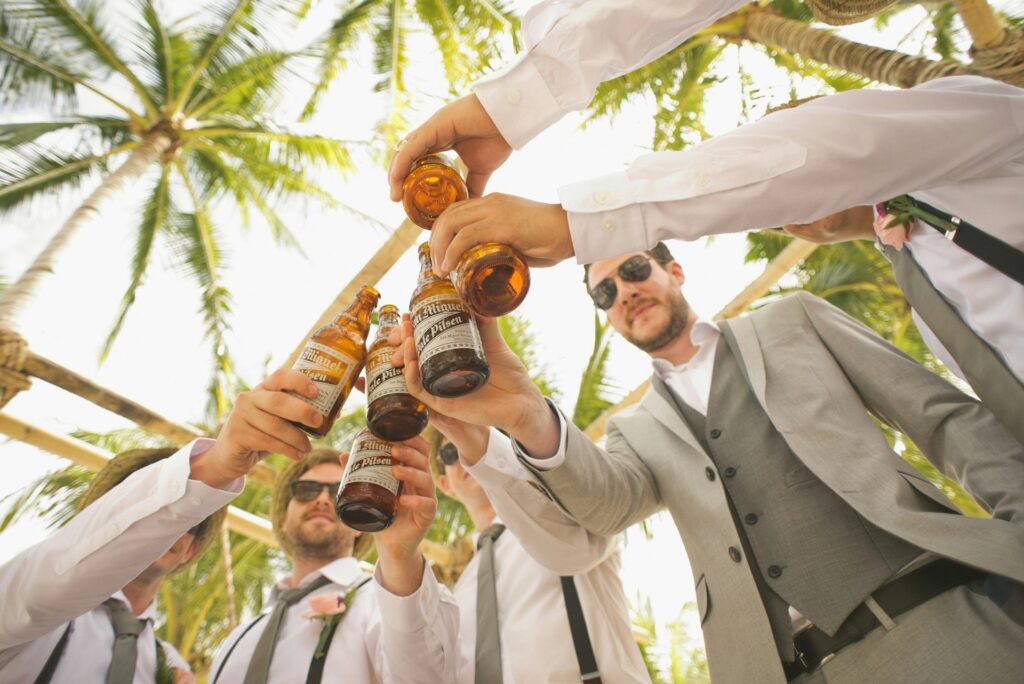
The main factors under your control that impact the cost of your bar include guest count, reception length, location and the type of alcohol you serve. For instance, a cocktail hour usually costs $35 per guest. These aren’t obstacles but rather the very elements that allow you to customize the bar to fit your budget.
Guest Count and Duration
Every additional guest and every extra hour at your reception proportionally increase the total volume of drinks needed. The industry rule of thumb for consumption is to plan for one drink per guest, per hour of the reception.
Here’s a simple example to illustrate this:
- 100 guests × 4-hour reception: You’ll need 400 drinks.
- 150 guests × 5-hour reception: You’ll need 750 drinks.
This basic formula is the foundation for everything. It determines the number of bottles, cases and kegs you’ll need to account for as you plan.
Location and Bar Tier
Geographical location and the tier of alcohol you choose cause drastic shifts in the final price tag. Venues and caterers typically offer different bar package tiers, so understanding the lingo helps you make smart choices.
Well brands are the most affordable house spirits. Call brands are midrange, recognizable options that guests specifically call by name, like Jack Daniel’s or Absolut. Choosing a premium package over a well package can easily double the per-person cost.
Cost Breakdown by Alcohol Type
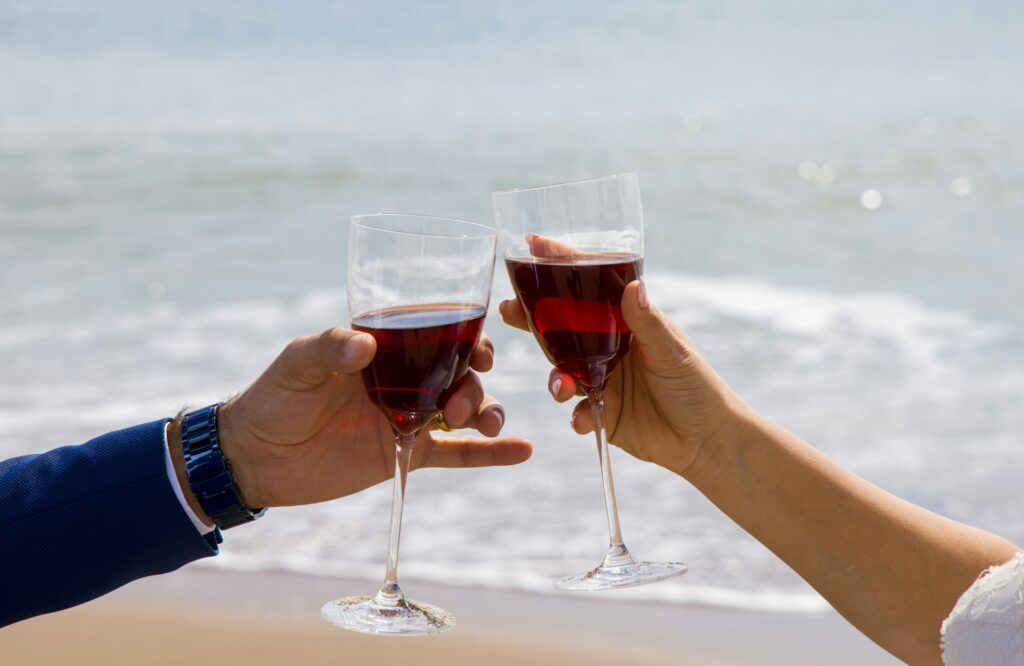
Curious about how much each type of alcohol might set you back? Here’s a quick breakdown of average prices to help you plan and see where most of your drinks budget will go.
Beer
Beer is often one of the most popular choices at weddings because it’s easy to serve and there’s usually a type for everyone. A case of beer costs about $19 on average. Depending on your guest list and whether people prefer bottles or kegs, your total cost will vary, but this is a good ballpark to start with.
If you’re expecting many beer drinkers, a keg can be more cost-effective. A sixth-barrel keg provides approximately 41 pints of beer, or around 55 cans or bottles.
Wine
A general guideline is to allot around 15% of your reception budget to wine and champagne. This covers both the wine served during dinner and the bubbly for toasts.
Wine is another wedding staple, perfect for toasting or pairing with dinner. A bottle of wine typically runs about $14. You might want a mix of red and white, or even some sparkling options, but knowing the average price per bottle helps you estimate how many you’ll need.
Here’s a breakdown of the average cost of wine types:
- Red wine: $15 per bottle
- White wine: $13 per bottle
Liquor
If you’re planning to have cocktails or a full bar, you’ll also want to include liquor in your budget. A standard 750ml bottle usually costs around $22. The total will depend on how many kinds of liquor you provide and how many mixed drinks you expect your guests to order, but this gives you a sense of what to expect when stocking your bar.
How Much Does an Open Bar vs. a Cash Bar Cost?
An open bar typically ranges from $15 to $60 per person, depending on the tier and venue. A cash bar, on the other hand, costs you almost nothing.
An open bar is a generous option since it means you cover all the drinks for your guests, but it’s a significant expense. With a cash bar, guests pay for their own drinks, which shifts the expense entirely away from your budget. Both options have their merits, and your choice depends on your financial comfort level and how you want your guests to experience the celebration.
What Are the Best Ways to Save Money on Your Drink Menu?
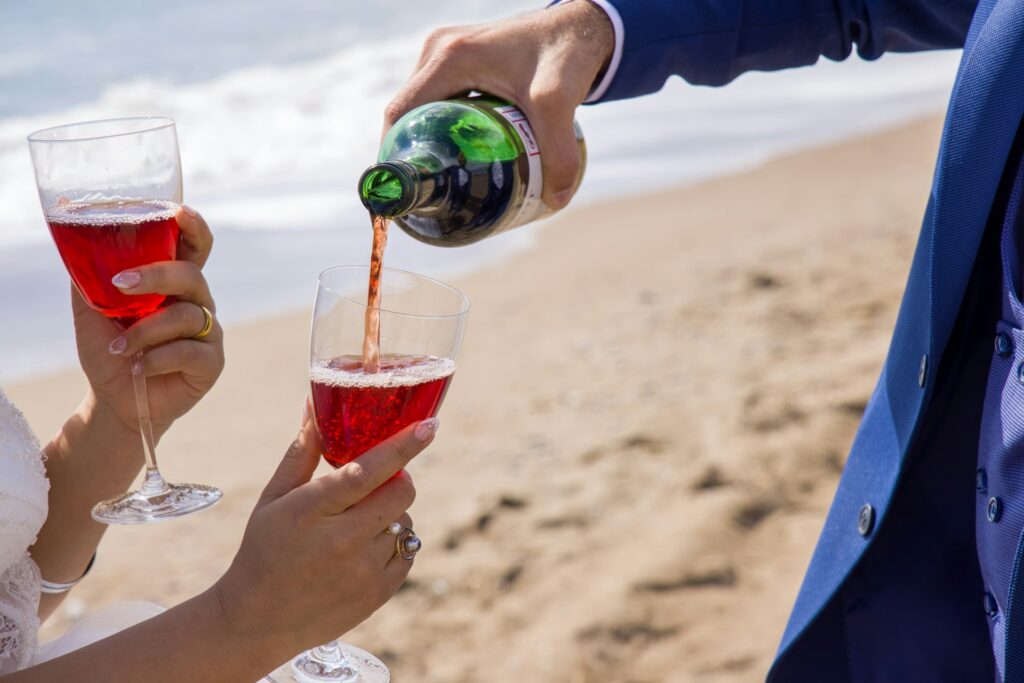
The best ways to save money on your drink menu are to simplify your offerings, choose intentional upgrades and focus your budget where it matters most. The key is choosing strategies that feel intentional and stylish rather than stingy. With a few thoughtful swaps, you can create a bar experience that feels generous without stretching your wedding budget too far.
Consider a Beer and Wine Only Setup
Dropping hard liquor completely and serving only beer and wine can significantly cut your total bar bill while still keeping guests happy. This is a popular and classic way to manage bar costs effectively.
Beer and wine setups feel approachable and elegant. Most guests will find something they enjoy, and you’ll avoid the expense of stocking a dozen different liquors and mixers.
Curate a Few Signature Cocktails
This is the perfect best-of-both-worlds compromise. It’s more elevated than just beer and wine, but far more affordable than a full bar. Signature cocktails add a personal, custom touch to your reception.
You can name the drinks after yourselves, a beloved pet or a meaningful place. The financial benefit is clear: you only need to purchase the specific ingredients for those one or two cocktails, rather than stocking an entire liquor cabinet.
Raise a Glass Without Breaking Your Budget
You’re now equipped with the knowledge to make informed, empowered decisions about your wedding bar. Remember that your guests are there to celebrate your union, not to critique the drink selection. Choose the option that feels joyful and financially sound for you. The best celebration is one you can relax and enjoy without stress hanging over your head.





Share this article