


Revivalist is a reader-supported endeavor and our posts may contain affiliate links. When you buy through links on our site, we may earn an affiliate commission.
For most people considering a facelift, the bigger worry isn’t looking older. It’s looking “done” when the procedure is complete — tight across the cheeks, swept back toward the ears and unfamiliar in the mirror. However, the right surgeons specialize in natural results to ensure you feel confident and beautiful. If you’re considering a facelift, here’s what sets the best surgeons in the U.S. apart when it comes to facelifts with natural-looking results.
Why Some Facelifts End up Looking Pulled or Overdone
According to the facial plastic surgeons at L&P Aesthetics, the windswept look comes from older techniques that lift by pulling the skin tight. The deep plane approach works differently. The surgeon lifts the deeper layer of muscle and supportive tissue, which is called the SMAS, or superficial musculoaponeurotic system, as a single unit. The skin settles over it without tension.
As L&P describes it, this approach is used to “avoid pulling the skin taut and create a more natural look.”
The Credentials a Top Facelift Surgeon Should Have
Knowing what credentials a top facelift surgeon should have makes the search far less overwhelming. Two markers carry the most weight — a focus on facial plastic surgery and double board certification.
Look for a Surgeon Who Specializes in Facial Plastic Surgery
“Plastic surgeon” and “facial plastic surgeon” describe different training paths, and research shows the public confuses them.
A surgeon who works only on the face has built their whole practice around facial anatomy.
Dr. Steven A. Curti, double-board-certified facial plastic surgeon and medical director of L&P Aesthetics in Los Gatos, says, “My philosophy on facial plastic surgery revolves around achieving natural-looking results.”
When evaluating a surgeon, ask questions to help you confirm their specialization:
- What share of your practice is facial surgery? A surgeon whose entire practice focuses on the face brings concentrated experience to your procedure.
- Which facelift techniques do you perform? Understanding the techniques a surgeon uses shows whether they’ve invested in advanced training.
- How many facelifts do you perform each year? Higher volume can indicate both expertise and ongoing skill refinement.
Confirm Double Board Certification
According to the facial plastic surgeons at L&P Aesthetics, you should “confirm double board certification in facial plastic surgery.”
Double certification means the surgeon has completed training in head and neck surgery and additional certification in facial plastic surgery. That layered training matters. In one study of 24 aesthetic surgery patients, 16 of 24 undervalued certification when choosing their surgeon.
How to Judge a Surgeon’s Results Before You Book
Credentials tell you what a surgeon is trained to do. Before-and-after photos and patient reviews show you what they’ve actually done and help you determine if those are the results you’re looking for.
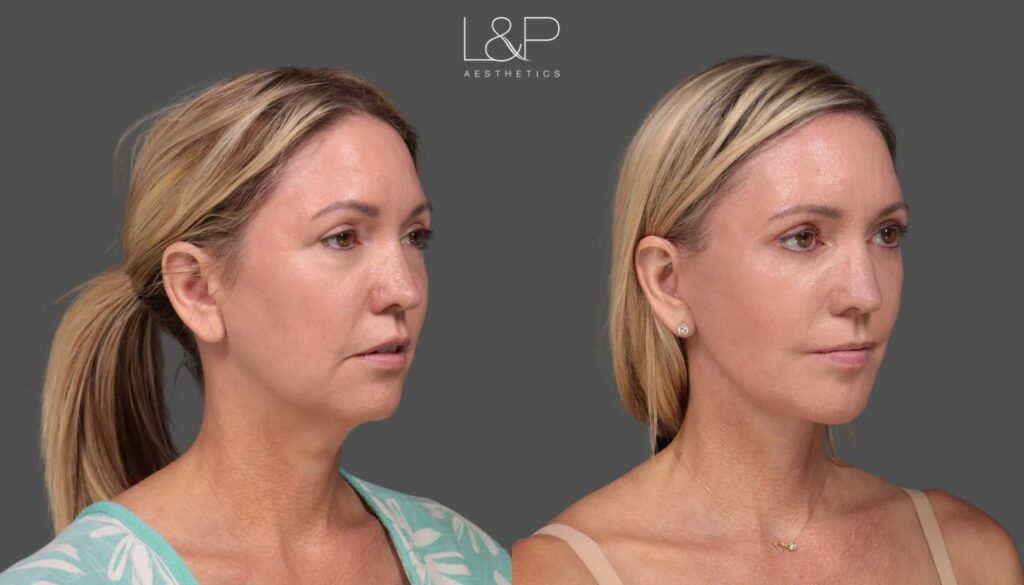
What to Look for in Before-and-After Photos
In a study of 567 Instagram facelift posts, just 25% met quality standards, revealing substantial inconsistencies. Many showed distortions, such as smaller faces after surgery or significantly brighter lighting. Look for photos with matching lighting, the same head angle, a consistent background, no makeup changes and images taken well after surgery.
L&P also recommends reviewing before-and-after photos of patients with similar facial structures to yours.
As Drs. Lieberman and Parikh note, “Natural results don’t happen by accident.”
The direction of the lift is tailored to each patient’s anatomy, so a strong gallery should show varied faces that each still looks like themselves.
How to Read Patient Reviews the Right Way
In an analysis of 2,153 facelift reviews, 92.24% were positive, and 7.76% were negative. A strong average rating is common, so read the negative reviews for patterns. The procedure outcome was cited in 82.04% of negative reviews, and it helps to look for repeated mentions of an unnatural or pulled appearance for clarity.
The FTC offers a few red flags to help you spot fake reviews:
- Check how recent reviews are: A sudden burst of reviews in a short window can indicate manipulation.
- Look at the reviewer’s history: Accounts with no other reviews or activity may not be genuine.
- Remember, fake reviews can be negative too: Competitors sometimes post critical reviews to damage a practice’s reputation.
L&P advises using the consultation to determine whether the surgeon listens to your concerns and sets realistic expectations. That’s something no review can confirm for you.
Why a Surgeon’s Safety Record Should Factor Into Your Decision
Facelift surgery carries risks like any procedure. According to MedlinePlus, these include a hematoma that may need draining, nerve damage that’s usually temporary but can be permanent, poor wound healing and numbness. Most patients are pleased with their results.
A 2025 meta-analysis of 47 studies involving 10,766 patients found comparable safety between SMAS and deep plane facelifts. The study noted that the choice of technique should be individualized.
Ask questions about experience and complication handling:
- How often do you perform this specific technique?
- Where is the surgery performed?
- How do you handle complications if they arise?
L&P’s surgeons perform deep plane face and neck lifts multiple times each week. Dr. Sachin Parikh co-authored a 2011 Aesthetic Surgery Journal paper describing a deep plane technique.
Frequently Asked Questions
A few common questions arise when patients compare facelift surgeons.
What makes a facelift look natural instead of pulled?
The skin isn’t used for lifting. The deeper tissue is repositioned instead, so there’s no tension pulling the face back toward the ears.
What credentials should a top facelift surgeon have?
Surgeons should have a focus on facial plastic surgery and double board certification. Both signal concentrated training in the anatomy and techniques a facelift requires.
How can you tell if before-and-after photos are reliable?
Look for consistent lighting, angle, and background across the before and after images. Review patients whose faces resemble yours to see how the surgeon handles similar anatomy.
Is a deep plane facelift safe?
Complication rates are low, and safety is comparable to SMAS techniques. Risks still exist and should be discussed at your consultation so you understand what to expect.
Choosing the Surgeon for Facelifts With Natural Results
Natural results come from lifting the deeper tissue, not from tightening the skin. Look for a provider with a facial plastic surgery focus and double board certification. Examine photos and reviews critically, not at face value. Ask about risks, how often the technique is performed and where the surgery happens. The right surgeon is the one whose patients look like themselves and are happy with the results.




Share this article