


Revivalist is a reader-supported endeavor and our posts may contain affiliate links. When you buy through links on our site, we may earn an affiliate commission.
Fall weddings practically decorate themselves. Amber leaves, string lights and a crisp golden hour do a lot of the heavy lifting before you spend a single dollar. That is good news, because weddings are not getting cheaper year after year. You do not need to spend what the average couple spends to get a day that looks every bit as polished. With the right rustic touches, you can build a day that photographs like a $30,000 event without touching that budget. Here are eight ways to do it.
1. Pick a Working Farm or Barn over a Traditional Venue
Traditional ballrooms charge you for square footage and a built-in aesthetic. A working farm, orchard, or barn gives you both for a fraction of the price, because the character is already there. Weathered wood, open beams and rolling fields do not need much dressing up, which means your decor budget stretches further everywhere else.
Before booking, ask what is included. Many barn venues bundle tables, chairs and string lighting into the rental fee, which are three separate line items at a hotel. That savings matters more than ever, since running the math through an official government inflation calculator shows a wedding that cost roughly $15,800 in the mid-1990s comes out to about $35,000 today. Bundling those line items into a single rental fee can offset a significant portion of your catering costs.
2. Lean into an Off-Peak Fall Date
October Saturdays book up fast and price up accordingly. A Friday or Sunday, or a date in late September or November, can cost significantly less for the identical venue. Venues discount these dates because demand drops off sharply once you move outside the three or four peak weekends of the season.
- Ask vendors directly about off-peak pricing; many will not advertise it
- Consider a Sunday brunch reception instead of an evening dinner to cut catering costs further
- Look at Thursday weddings if your guest list is mostly local
3. Build Your Florals around What Is Already in Season
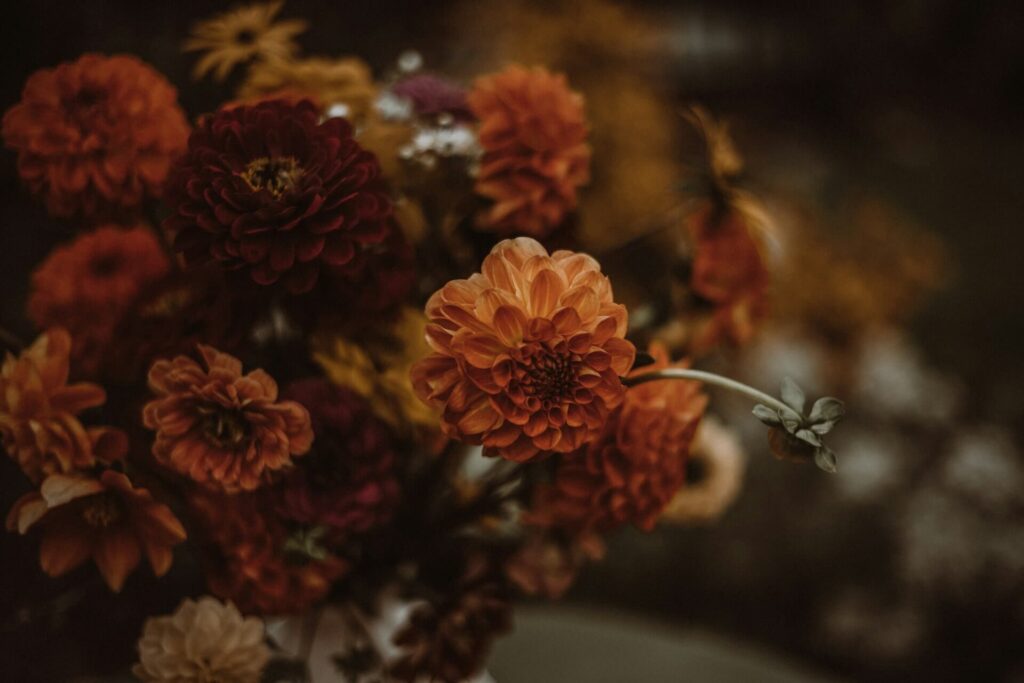
Fall gives you a built-in color palette for free: dahlias, mums and branches with turning leaves cost less than imported summer blooms because florists do not have to source them out of season. Layering in dried elements like pampas grass or wheat stems adds volume without adding to the per-stem price. Knowing which blooms peak by month makes it much easier to build a bouquet and centerpiece plan that never fights the calendar.
Ask your florist to reuse ceremony arrangements as reception centerpieces. Moving a handful of arrangements rather than building two separate sets can meaningfully reduce your floral invoice.
4. Rent Instead of Buy for Anything You Will Use Once
Arches, lanterns, wine barrels and vintage furniture look expensive because they usually are, if you buy them outright. Rental companies that specialize in rustic decor exist specifically so you don’t end up storing a wooden arch in your garage come November. Renting a full tablescape set is almost always cheaper than piecing one together from retail purchases, and it saves you the resale hassle afterward.
5. Choose a Seasonal, Family-Style Menu
Fall produce is genuinely more affordable for caterers to source, and that savings can pass to you if you build a menu around it. Checking a seasonal produce availability guide makes it easy to confirm which fruits and vegetables are at their cheapest each month. Squash, root vegetables, apples and braised meats read as warm and abundant on a rustic table, and family-style service costs less per head than a plated, multi-course dinner because it needs fewer serving staff.
Wedding budgets most often go over in the food and beverage category, since costs scale directly with each additional guest. A tighter, seasonal menu keeps that line item predictable instead of letting it balloon as your final headcount firms up.
6. Swap a DJ or Band for a Curated Playlist and Sound System
Entertainment typically eats up three to five percent of a wedding budget. A quality speaker system and a thoughtfully built playlist can replace a full band for the cocktail hour and dinner, with a DJ or live musician brought in only for the reception dance floor. This hybrid approach keeps the energy where guests actually want it, without paying full entertainment rates for every hour of the day.
7. Use Signage and String Lights as Your Primary Decor Layer
Handwritten wood signs, mismatched lanterns and layers of string lights create atmosphere cheaply, because the labor is mostly your own time rather than a rental fee. A single strand of warm bulbs strung across a barn ceiling instantly transforms a plain space, and it costs a fraction of the cost of a full lighting design package from an event company.
Battery-powered string lights also mean you are not paying an electrician to run new outlets through a barn or outdoor tent, which is a hidden cost many couples do not budget for until it is too late.
- Buy lights in bulk rather than renting them by the strand
- Reuse ceremony signage at the reception entrance
- Ask a crafty friend or family member to handle hand-lettered signs as their wedding gift to you
8. Make One Detail the Splurge, Not Everything

Every rustic wedding that reads as expensive has one thing done exceptionally well, not 20 things done adequately. Pick a single element you care about most, whether that is a photographer, a dress or a dessert table, and put real budget behind it. Everything else can be handled affordably because that one splurge is doing the visual work of signaling quality to every guest who walks through the door. Sticking to that plan also keeps you out of avoidable wedding-related debt, which is far easier to prevent than to pay off later.
This is also the most reliable way to avoid decision fatigue. Instead of agonizing over 20 small choices, you make one big call early and let it anchor every other decision that follows.
Making Rustic Charm Do the Heavy Lifting
Rustic charm has never needed a big budget to look intentional. Fall does most of the visual work for you, and every choice above is about spending on the details guests actually notice while quietly trimming the ones they never will. Build your day around a handful of smart splurges, and the rest of the budget will stretch further than you think.


Share this article